




What’s the first thing your customer notices when they land on your online store?
It’s not your product. It’s not your price. It’s your website design.
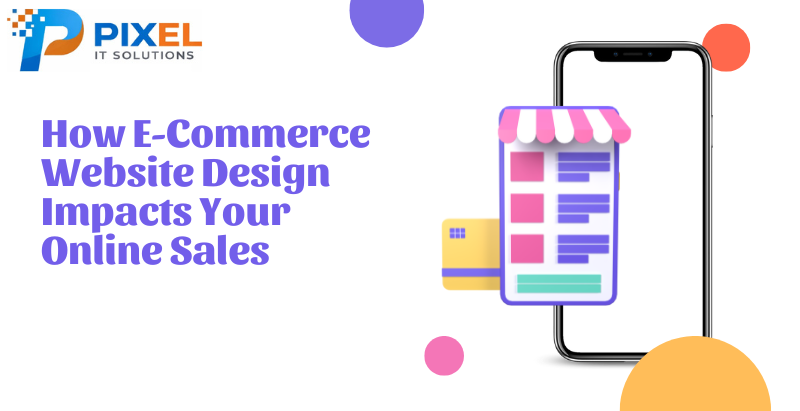
In the fast-paced world of e-commerce, your website isn’t just a digital storefront—it’s your most important salesperson. It works 24/7, makes first impressions in milliseconds, and plays a key role in converting visitors into paying customers. Yet, many businesses underestimate just how deeply design impacts their online sales.
In this guide, we’ll show you how thoughtful, conversion-focused e-commerce design can significantly improve your bottom line. At Pixel IT Solutions, we specialize in crafting custom e-commerce experiences that don’t just look great—they sell.
The Direct Connection: How Design Fuels Online Sales
- Trust and Credibility
A professional-looking website instantly builds trust. Shoppers are more likely to purchase from brands that appear polished, organized, and secure. - User Experience (UX)
Easy Navigation: Clear categories, logical layout, and smart menus help users find products faster—leading to higher engagement and more sales.
Fast Loading Times: A delay of even one second can lead to lost customers. Speed directly impacts bounce rates.
Seamless Journey: From homepage to checkout, users should move effortlessly through the process. - User Interface (UI)
Visual Appeal: A well-designed, visually pleasing interface keeps users browsing longer and reduces bounce rates.
Clarity and Consistency: Consistent branding, fonts, and button styles create a cohesive experience and reinforce your brand identity. - The Conversion Funnel
Every design element—from your banner to your “Buy Now” button—should guide users toward a purchase decision. Good design moves users step-by-step through the conversion funnel.
Key Design Elements for a High-Converting E-commerce Website
✔️Intuitive Navigation & Search
Clear categories and subcategories
Smart search bars with filters
Integrated e-commerce UX/UI keywords for product discovery
✔️ Visually Stunning Product Presentation
High-resolution product photos
Videos and 360-degree views
Persuasive, informative product descriptions
✔️ Compelling Calls-to-Action (CTAs)
Clear, action-driven buttons like “Buy Now” or “Add to Cart”
Strategic placement near product descriptions
Use of conversion-friendly design principles
✔️ Streamlined & Secure Checkout
Guest checkout options
Fewer form fields
Multiple payment gateways with security badges
✔️ Mobile Responsiveness
With over 70% of traffic coming from mobile, a mobile-first design is no longer optional.
Implement a responsive e-commerce app for Android & iOS to cover all user touchpoints
✔️ Personalization & Product Recommendations
Show customers related products based on browsing history or previous purchases
Offer personalized bundles or discount suggestions
✔️ Customer Reviews & Testimonials
Social proof boosts credibility and conversions
Integrate review sections directly on product pages
Shopify vs WooCommerce vs Custom Build – Which Is Right for You?
Choosing the right platform is a crucial decision that shapes your store’s performance, flexibility, and growth potential. While all three options—Shopify, WooCommerce, and a Custom-Built Solution offer unique advantages, your choice should align with your business size, goals, and technical capacity.
Here’s a breakdown to help you decide:
Platform Comparison Table
Feature Shopify WooCommerce Custom Build
Ease of Setup Beginner-friendly, hosted solution Requires WordPress setup and plugins Fully tailored, but requires developer support
Customization Limited to available themes and apps Moderate with plugins and themes Full flexibility—built exactly to your needs
Cost Monthly subscription + app fees Lower upfront, but costs can add up with plugins High initial investment, but no recurring platform fees
Scalability Scalable with limits for large enterprise stores Scalable with advanced hosting and optimization Built to scale from scratch
Maintenance Shopify handles updates and security User-managed updates and security You handle all support or work with a developer
Best For Quick launch, small-to-medium businesses Content-heavy stores, businesses using WordPress Businesses needing unique features or integration
Keyword Relevance Shopify development WooCommerce experts Custom e-commerce platform, hybrid e-commerce app development
The Mobile Imperative: Apps & User Experience
Why Mobile-First is Non-Negotiable
Consumer behavior has shifted—more purchases now happen on smartphones than desktops.
✔️ Responsive Design vs. Dedicated Apps
A responsive site adapts to screen size
A dedicated app provides speed, push notifications, offline access, and a smoother experience
✔️ Native Apps for Better UX
Investing in a responsive e-commerce app for Android & iOS enhances the e-commerce app user experience improvement, especially for returning customers.
✔️ Mobile UX Essentials
Thumb-friendly navigation
Auto-fill enabled forms
Minimalistic layout for better usability on small screens
How to Build an E-Commerce Website That Ranks on Google
Design isn’t just about user experience—it’s also about being found. If your e-commerce website isn’t optimized for search engines, you’re leaving traffic and sales on the table. A Google-friendly website merges great UX with solid SEO principles to attract more organic visitors.
Here’s what it takes to rank:
Essentials for Search-Optimized E-Commerce Development
Keyword Research Integration: Use tools like SEMrush, Ubersuggest, or Google’s Keyword Planner to align product pages with what your customers are searching for.
SEO-Friendly Architecture: Clean URLs, logical site structure, breadcrumb navigation, and internal linking help Google crawl your site more effectively.
Fast Loading Speeds: Site speed is a direct ranking factor—optimize images, reduce scripts, and use CDN.
Optimized Product Pages: Each page should have unique meta titles, meta descriptions, image alt text, and structured data.
Mobile Optimization: Build search-friendly e-commerce mobile apps or mobile-first websites that meet Core Web Vitals criteria.
Content Strategy: Incorporate blogs, how-to guides, and product-focused content that targets SEO for e-commerce.
Technical SEO Essentials: XML sitemaps, robots.txt, secure HTTPS, and schema markup all contribute to visibility.
At Pixel IT Solutions, we specialize in e-commerce development and SEO, ensuring your store is not only user-friendly but also search-engine ready.
How Digital Karobari Elevates Your E-Commerce Sales
At Digital Karobari, we don’t just design e-commerce websites—we build sales machines.
Our Expertise in E-commerce Development
We create bespoke, conversion-focused designs that deliver measurable results
Our focus on e-commerce UX/UI ensures visitors enjoy a seamless shopping experience
Our Services for Maximizing Sales:
Custom E-commerce Website Development
Conversion Rate Optimization (CRO)
Mobile-First & Responsive Design
E-commerce App Development for Android & iOS
Ongoing Performance Optimization and Support
“Digital Karobari helped us reduce cart abandonment by 40% through design tweaks alone. The results were instant!” — Client Testimonial
Why Partner With Us?
Data-Driven Decisions: Every design choice is backed by analytics
Proven Track Record: We’ve helped e-commerce brands across industries grow
Local Understanding: As a Mumbai-based agency, we understand both local and global buyer behaviors
Conclusion: Design for Success, Not Just Appearance
Your e-commerce website design is directly linked to your sales performance. It’s not just about looking good—it’s about converting visitors into loyal buyers.
Ready to transform your e-commerce store into a sales powerhouse?
Don’t let poor design limit your business potential.
Contact Pixel IT Solutions today for a consultation on how our expert e-commerce design and development solutions can drive your revenue.