




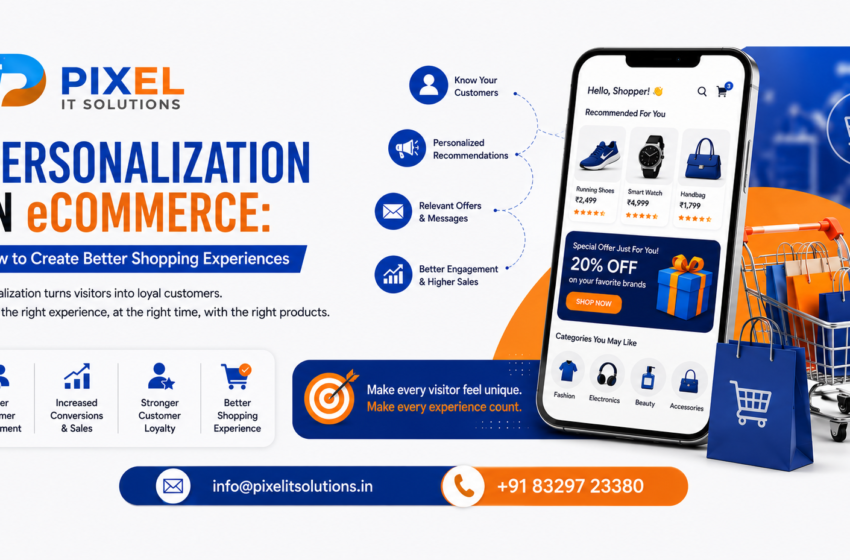
In today’s competitive eCommerce market, customers expect more than simply browsing a catalog and completing a transaction. They want shopping experiences that understand their interests, preferences, and needs. eCommerce personalization helps businesses deliver relevant products, content, offers, and recommendations to individual shoppers.
From personalized product recommendations to targeted emails and dynamic website experiences, personalization can make online shopping more convenient while helping businesses improve engagement and conversions.
What Is eCommerce Personalization?
eCommerce personalization is the process of tailoring a customer’s online shopping experience based on information such as browsing behavior, purchase history, preferences, location, interactions, and shopping patterns.
For example, an online fashion store may recommend products based on items a customer has previously viewed. An electronics website might suggest accessories related to a recently purchased device.
The goal is simple: show the right experience to the right customer at the right time.
Why Is Personalization Important for eCommerce?
A generic shopping experience may not address the specific needs of every visitor. Personalization allows businesses to make their websites and marketing communications more relevant.
- Improves Customer Experience
Personalized recommendations can help shoppers find relevant products faster. Instead of searching through hundreds of products, customers can discover options that better match their interests. - Increases Product Discovery
Personalization can introduce customers to products they may not have discovered through traditional browsing. Related products, frequently bought together items, and personalized collections can make product discovery easier. - Supports Better Engagement
Relevant content is more likely to capture customer attention. Personalized banners, recommendations, emails, and offers can encourage shoppers to interact with an eCommerce brand. - Can Improve Conversions
When customers see products and offers that match their interests, they may be more likely to make a purchase. Personalization can therefore become an important part of an eCommerce conversion strategy. - Encourages Customer Loyalty
A shopping experience that feels relevant and convenient can help businesses build stronger customer relationships. Personalized communication can also encourage repeat purchases.
Effective eCommerce Personalization Strategies
Personalized Product Recommendations
Product recommendations are one of the most common forms of eCommerce personalization. Businesses can recommend products based on browsing behavior, previous purchases, related products, or customer preferences.
For example, a customer purchasing running shoes could receive recommendations for running socks, sportswear, or fitness accessories.
Personalized Search Results
Search functionality can also be personalized. By understanding customer behavior and preferences, an eCommerce platform can prioritize products that are more relevant to a particular shopper.
Personalized Offers and Discounts
Instead of providing the same discount to every customer, businesses can create targeted offers based on purchase behavior, customer segments, or shopping activity.
For example, returning customers could receive a loyalty offer, while customers who abandoned their carts could receive a reminder.
Personalized Email Marketing
Email campaigns can become more effective when content reflects customer interests. Businesses can send product recommendations, abandoned-cart reminders, replenishment notifications, and offers based on individual customer activity.
Personalized Website Content
Different customers can be presented with different content based on their interests or previous interactions. Personalized product categories, banners, recommendations, and promotional messages can make the website experience more relevant.
Location-Based Personalization
Businesses can use location information to provide relevant delivery options, regional promotions, currencies, or product availability where appropriate.
How AI Is Transforming eCommerce Personalization
Artificial intelligence can analyze large amounts of customer and product data to identify patterns and generate recommendations. AI-powered systems can help businesses understand shopping behavior and deliver more relevant experiences.
AI can support:
Product recommendations
Customer segmentation
Predictive purchasing insights
Personalized search
Automated marketing campaigns
Dynamic content
Customer behavior analysis
As AI technologies continue to develop, personalization is becoming more dynamic and data-driven.
How to Implement Personalization Successfully
Personalization should not be introduced simply because it is a popular technology trend. Businesses should first identify specific customer experience problems they want to solve.
Start by collecting relevant first-party data through customer interactions, purchases, website behavior, and preferences. Then segment customers based on meaningful characteristics and identify opportunities for personalized experiences.
Businesses should also test different personalization strategies and monitor metrics such as conversion rate, engagement, average order value, repeat purchases, and customer retention.
Most importantly, personalization should respect customer privacy. Businesses need transparent data practices and appropriate security measures when collecting and using customer information.
Common Personalization Mistakes to Avoid
Personalization can become ineffective when businesses overuse customer data or make recommendations that are not relevant.
Common mistakes include:
Using inaccurate customer data
Showing repetitive recommendations
Sending excessive personalized messages
Ignoring customer privacy
Creating personalization without clear objectives
Failing to test personalization campaigns
Making the website experience too complicated
Effective personalization should feel helpful rather than intrusive.
Conclusion
eCommerce personalization can transform a generic online store into a more relevant and engaging shopping experience. By using customer insights, product recommendations, personalized content, targeted offers, and AI-powered technologies, businesses can help shoppers discover products more easily and build stronger relationships.
The key is to focus on customer value, relevance, privacy, and continuous optimization. When implemented strategically, personalization can benefit both customers and eCommerce businesses.
Ready to create a smarter and more personalized eCommerce experience?
At Pixel IT Solutions, we help businesses build modern, user-focused digital solutions designed around their customers. From eCommerce development to customized digital experiences, our team can help you turn customer insights into meaningful online experiences.
Contact Pixel IT Solutions today and take your eCommerce experience to the next level.
Company Name: Pixel IT Solutions
Website: https://pixelitsolutions.in/
📞: +91 832-972-3380
FAQs
- What is personalization in eCommerce?
eCommerce personalization means tailoring products, content, offers, recommendations, and shopping experiences according to individual customer preferences and behavior. - How does personalization improve online shopping?
It helps customers discover relevant products faster, receive more useful recommendations, and interact with content that matches their interests. - Can personalization increase eCommerce sales?
Yes. Relevant recommendations and targeted experiences can help improve engagement, conversions, average order value, and repeat purchases. - How is AI used in eCommerce personalization?
AI can analyze customer behavior and product data to provide recommendations, personalize search results, segment customers, and automate targeted marketing. - Is eCommerce personalization suitable for small businesses?
Yes. Small businesses can start with simple strategies such as personalized product recommendations, email campaigns, abandoned-cart messages, and customer segmentation. - How can businesses personalize an eCommerce website?
Businesses can personalize product recommendations, search results, website content, promotions, emails, and product collections based on customer interactions and preferences.