





Introduction
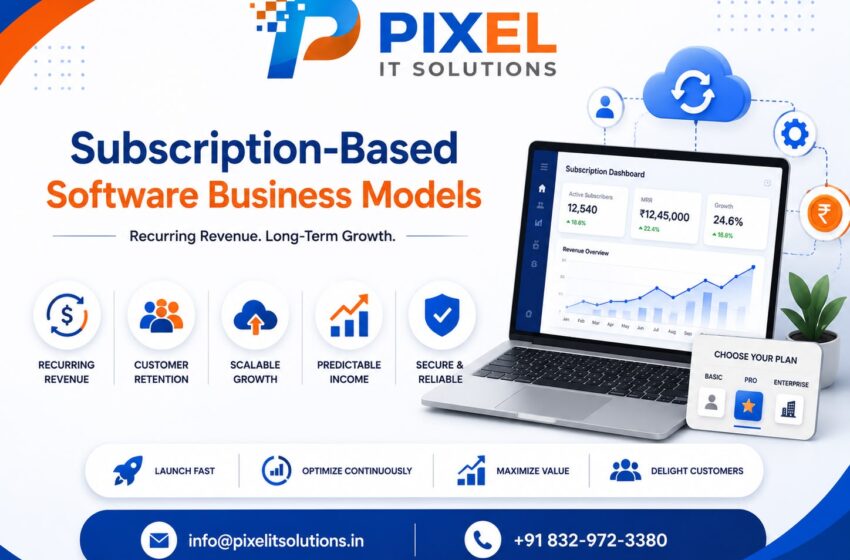
The software industry has undergone a remarkable transformation over the past decade. Businesses are no longer relying solely on one-time software purchases to generate revenue. Instead, they are embracing subscription-based software business models, which provide customers with continuous access to products and services in exchange for recurring monthly or annual payments.
This shift has revolutionized how software companies operate, enabling them to build long-term customer relationships while generating predictable and sustainable revenue. Today, some of the world’s most successful companies—including Netflix, Microsoft 365, Adobe Creative Cloud, Salesforce, Zoom, Shopify, and Canva—have built billion-dollar businesses around subscription-based models.
For businesses planning to launch a Software-as-a-Service (SaaS) platform, CRM system, ERP software, healthcare application, educational portal, or enterprise solution, understanding subscription models is essential for long-term success.
At Pixel IT Solutions, we specialize in designing and developing scalable subscription-based software solutions that help businesses generate recurring income, improve customer retention, and expand globally.
What is a Subscription-Based Software Business Model?
A subscription-based software business model allows customers to access software by paying a recurring fee instead of purchasing a permanent license.
Rather than paying once and owning the software forever, customers subscribe for a specific period—typically monthly, quarterly, or annually. As long as their subscription remains active, they receive uninterrupted access to the software, regular updates, security improvements, cloud storage, customer support, and newly released features.
Unlike traditional software licensing, subscription models encourage continuous innovation because businesses must consistently improve their products to retain subscribers.
Why Subscription Models Have Become the Industry Standard
The rapid growth of cloud computing and SaaS technology has made subscription software the preferred choice for businesses worldwide.
Instead of spending a large amount upfront, customers enjoy affordable monthly payments while businesses benefit from steady revenue.
Major reasons behind this shift include:
- Predictable monthly recurring revenue
- Lower customer acquisition costs over time
- Higher customer lifetime value
- Easier software maintenance
- Automatic feature updates
- Better scalability
- Improved customer support
- Cloud accessibility from anywhere
This approach creates a win-win situation for both software providers and customers.
Traditional Software vs Subscription Software
| Traditional Software | Subscription Software |
| One-time purchase | Monthly or yearly payments |
| Manual software updates | Automatic updates |
| Large upfront investment | Affordable recurring pricing |
| Limited customer engagement | Continuous customer relationship |
| Difficult scalability | Easily scalable |
| Revenue depends on new sales | Predictable recurring revenue |
| Higher piracy risk | Cloud-based secure access |
Subscription software provides significantly greater flexibility and financial stability compared to traditional software licensing.
Different Types of Subscription-Based Software Business Models
Choosing the right pricing strategy is one of the most important decisions when developing subscription software.
1. Flat-Rate Subscription Model
Customers pay one fixed fee regardless of usage.
This model is straightforward and easy to understand.
Best For
- Small SaaS businesses
- Productivity tools
- Content management systems
- Project management software
Advantages
- Easy pricing structure
- Simple billing
- Predictable income
- Easy customer onboarding
2. Tiered Pricing Model
Customers choose different subscription plans depending on their business requirements.
Typical plans include:
- Starter
- Basic
- Professional
- Business
- Enterprise
Each tier unlocks additional features, storage, integrations, or users.
Benefits
- Serves multiple customer segments
- Encourages plan upgrades
- Higher revenue potential
- Flexible pricing
Most successful SaaS companies use this pricing model.
3. Freemium Model
Customers receive a free version with limited features while premium features require a paid subscription.
Examples include:
- Canva
- Dropbox
- Spotify
- Grammarly
Advantages
- Rapid customer acquisition
- Product familiarity
- Lower marketing costs
- Higher conversion opportunities
The challenge lies in providing enough value to encourage users to upgrade.
4. Usage-Based Pricing (Pay-As-You-Go)
Customers pay according to actual software usage.
Billing may depend on:
- API requests
- Storage consumed
- Bandwidth
- Transactions
- Active users
- Computing resources
Cloud service providers commonly use this pricing model.
Ideal For
- Cloud platforms
- AI software
- Hosting companies
- Analytics platforms
5. Per User Pricing
Each user requires a separate subscription.
Pricing grows as organizations expand.
Examples include:
- CRM Software
- HR Management Systems
- Collaboration Platforms
This model is particularly popular among B2B software providers.
6. Feature-Based Pricing
Customers pay according to the features they need.
Advanced functionality is reserved for premium plans.
Common premium features include:
- AI automation
- Analytics dashboards
- Third-party integrations
- Workflow automation
- Advanced reporting
7. Enterprise Subscription Model
Large organizations receive custom pricing based on:
- Company size
- Security requirements
- Storage
- Integrations
- Dedicated support
- Custom development
Enterprise contracts usually involve annual agreements.
Industries That Benefit from Subscription Software
Almost every industry is adopting subscription-based platforms.
Popular industries include:
Healthcare
- Hospital Management Systems
- Telemedicine Platforms
- Patient Portals
Education
- Learning Management Systems
- Online Course Platforms
- Virtual Classrooms
Finance
- Accounting Software
- Tax Management
- Investment Platforms
E-commerce
- Inventory Management
- Seller Platforms
- Marketplace Software
Marketing
- SEO Tools
- Email Marketing
- Social Media Automation
Manufacturing
- ERP Software
- Supply Chain Management
- Production Planning
Real Estate
- Property Management Software
- CRM Platforms
- Listing Portals
Core Features of Subscription-Based Software
Successful subscription software should include robust functionality that enhances user experience and simplifies business operations.
User Management
- Secure registration
- Login authentication
- Multi-user roles
- Profile management
Subscription Management
- Plan upgrades
- Downgrades
- Renewals
- Cancellation
- Trial periods
Payment Integration
- Credit/Debit Cards
- UPI
- Net Banking
- PayPal
- Stripe
- Razorpay
Billing Automation
- Automated invoices
- Recurring payments
- Tax calculations
- Payment reminders
Dashboard & Analytics
- Revenue reports
- Active subscribers
- Customer engagement
- Subscription growth
- Churn analysis
Security
- Data encryption
- Role-based access
- Secure cloud hosting
- Backup management
- GDPR compliance
Benefits of Subscription-Based Software for Businesses
Businesses adopting subscription models enjoy several competitive advantages.
Predictable Revenue
Recurring subscriptions create a stable monthly cash flow that simplifies financial planning and investment decisions.
Higher Customer Lifetime Value (CLV)
Customers who stay subscribed for months or years contribute significantly more revenue than one-time buyers.
Stronger Customer Relationships
Regular updates, feature enhancements, and ongoing support keep customers engaged and satisfied.
Easier Product Improvements
Continuous customer feedback allows businesses to improve the software without waiting for major product releases.
Better Business Valuation
Investors often value subscription-based companies more highly because recurring revenue is more predictable than one-time sales.
Common Challenges of Subscription Software
Despite its advantages, subscription software also presents several challenges.
Customer Churn
Retaining subscribers requires ongoing innovation and excellent customer support.
Pricing Strategy
Setting prices too high may discourage users, while pricing too low can impact profitability.
Infrastructure Costs
Cloud hosting, data storage, and security require continuous investment.
Competition
The SaaS market is highly competitive, making differentiation essential.
Customer Support
Subscribers expect quick issue resolution and reliable technical assistance.
How to Build a Successful Subscription-Based Software Platform
Launching a subscription business requires careful planning and execution.
Step 1: Identify Your Target Audience
Understand your ideal customers, industry, and pain points.
Step 2: Choose the Right Pricing Model
Select a pricing structure that aligns with customer expectations and business goals.
Step 3: Design an Intuitive UI/UX
Focus on simplicity, accessibility, and user-friendly navigation to improve engagement.
Step 4: Develop Scalable Architecture
Build cloud-native software capable of supporting future growth.
Step 5: Integrate Secure Payment Gateways
Offer multiple payment methods and automated recurring billing.
Step 6: Track Performance
Monitor metrics such as Monthly Recurring Revenue (MRR), Customer Lifetime Value (CLV), Customer Acquisition Cost (CAC), Average Revenue Per User (ARPU), and Churn Rate.
Why Choose Pixel IT Solutions for Subscription Software Development?
Pixel IT Solutions develops custom subscription-based software tailored to your business objectives.
Our services include:
- Custom SaaS application development
- Subscription billing system integration
- Multi-tenant cloud architecture
- Responsive UI/UX design
- CRM and ERP development
- Mobile application integration
- API development and third-party integrations
- Secure cloud deployment
- Performance optimization
- Ongoing maintenance and support
Whether you’re launching a startup or modernizing enterprise software, our team delivers scalable, secure, and future-ready solutions.
Future Trends in Subscription-Based Software
The subscription economy continues to evolve with emerging technologies.
Key trends shaping the future include:
- AI-powered personalization
- Usage-based and hybrid pricing models
- No-code and low-code SaaS platforms
- Embedded finance and integrated payments
- Advanced customer analytics
- Automation-driven customer success
- Predictive churn analysis
- Multi-cloud deployments
Businesses that embrace these innovations will gain a competitive advantage in the years ahead.
Why Businesses Trust Pixel IT Solutions
Companies choose Pixel IT Solutions because we focus on creating software that delivers measurable business value.
Why Work With Us?
Our goal is to help businesses launch subscription platforms that generate recurring revenue, improve customer retention, and support long-term growth.
Ready to Launch Your Subscription Software?
Whether you’re building a SaaS product, membership platform, ERP system, CRM, or industry-specific subscription application, Pixel IT Solutions can help you bring your vision to life.
Company Name: Pixel IT Solutions
Website: https://pixelitsolutions.in/services/ui-ux-design-company-in-mumbai/
Phone: +91 832-972-3380
Contact us today for a FREE consultation and discover how subscription-based software can transform your business.
Frequently Asked Questions (FAQs)
1. What is a subscription-based software business model?
A subscription-based software model allows users to pay recurring monthly or annual fees instead of purchasing software outright. Subscribers receive ongoing access, updates, support, and new features throughout their subscription period.
2. What is the difference between SaaS and subscription software?
SaaS (Software as a Service) is a cloud-delivered software model that is commonly offered through subscriptions. While many SaaS products use subscriptions, subscription models can also apply to downloadable software, memberships, or digital services.
3. Which subscription pricing model is best?
The ideal model depends on your business. Tiered pricing is popular because it serves different customer segments, while freemium and usage-based pricing work well for products focused on rapid adoption or variable usage.
4. How do subscription businesses generate recurring revenue?
Businesses collect automatic recurring payments—monthly, quarterly, or annually—from active subscribers, creating predictable cash flow and long-term financial stability.
5. Can small businesses benefit from subscription software?
Yes. Subscription software offers affordable access to advanced tools, reduces upfront costs, provides regular updates, and allows businesses to scale as they grow.
6. Why should I choose Pixel IT Solutions for subscription software development?
Pixel IT Solutions develops secure, scalable, and user-friendly subscription platforms with custom features, recurring billing integration, responsive UI/UX, cloud deployment, and ongoing technical support tailored to your business needs.