




For an eCommerce business, getting customers to add products to their cart is only part of the journey. The real challenge is encouraging them to complete the purchase. A complicated, slow, or unreliable payment process can cause customers to abandon their carts at the final stage.
Payment gateway integration plays an important role in creating a smooth checkout experience. The right payment solution can make transactions faster, provide customers with familiar payment options, improve trust, and ultimately support higher conversion rates.
For businesses working with Pixel IT Solutions, integrating the right payment gateway into an eCommerce platform can be an important part of building a reliable and customer-friendly online shopping experience.
What Is Payment Gateway Integration?
A payment gateway is a technology that allows an eCommerce website or application to securely process online payments.
When a customer places an order, the payment gateway helps transmit payment information between the customer, merchant, payment processor, and financial institution. Once the transaction is authorized, the result is communicated back to the eCommerce platform.
Payment gateway integration connects this payment functionality directly with the online store so customers can complete transactions without unnecessary manual steps.
Why Payment Gateways Matter for eCommerce
Payment is one of the most sensitive stages of the customer journey. Customers want to know that their money and payment information are handled securely.
A well-integrated gateway can provide:
Faster checkout
Multiple payment options
Secure transaction processing
Better customer convenience
Automated payment confirmation
Reduced checkout friction
Improved order management
Better transaction tracking
A poor payment experience, on the other hand, can make customers question the reliability of the entire online store.
How Payment Gateway Integration Can Impact Sales
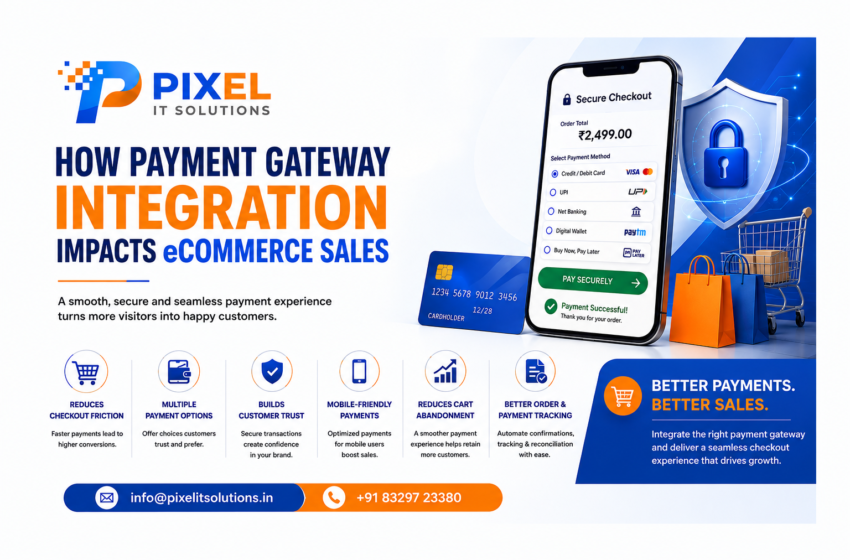
- Reduces Checkout Friction
Every additional step during checkout creates another opportunity for a customer to leave.
A well-designed payment process keeps the journey straightforward. Customers can select their preferred payment method, enter the required information, complete authentication when necessary, and receive confirmation.
The fewer unnecessary steps customers encounter, the easier it is to complete a purchase. - Provides Multiple Payment Options
Different customers prefer different ways to pay.
Depending on the target market, an eCommerce business may need to support options such as:
Credit and debit cards
UPI
Net banking
Digital wallets
Bank transfers
Buy Now, Pay Later options
International payment methods
Providing relevant payment options can help businesses serve a wider customer base and reduce the number of purchases lost because a preferred payment method is unavailable. - Builds Customer Trust
Customers need confidence before entering payment information on an unfamiliar website.
Security features, trusted payment providers, clear checkout messaging, secure connections, and recognizable payment options can help create a stronger sense of trust.
A professional checkout experience can reinforce the credibility of an eCommerce brand. - Supports Mobile Purchases
A significant amount of online shopping takes place through smartphones. Payment processes that work well on desktops may not necessarily provide the same experience on mobile devices.
Responsive payment pages and mobile-friendly checkout flows can make it easier for customers to complete purchases from their phones.
For businesses targeting mobile-first consumers, mobile payment experience should be considered during eCommerce development. - Helps Reduce Cart Abandonment
Cart abandonment can happen for many reasons, including unexpected costs, complicated checkout processes, lack of preferred payment methods, or payment failures.
While payment gateway integration cannot eliminate every reason for abandonment, a smooth and reliable payment experience can remove several potential obstacles.
Businesses should analyze where customers leave the checkout process and identify whether payment-related issues are contributing to lost sales. - Improves Payment Reliability
Payment failures can directly affect revenue.
A good integration should handle transaction responses appropriately and provide customers with clear messages when a payment succeeds, fails, or requires another action.
Proper error handling can prevent confusion and help customers retry unsuccessful transactions without having to start the entire purchase process again. - Enables Faster Order Confirmation
When a payment is successfully processed, the eCommerce system can automatically update the order status and trigger confirmation messages.
This creates a smoother experience for both customers and businesses.
Automated workflows can also help connect payments with:
Inventory management
Order processing
Invoicing
Email notifications
Customer accounts
Shipping systems
This reduces manual work and improves operational efficiency.
The Importance of Payment Security
Security should be a priority when integrating payment functionality.
Businesses should work with established payment providers and follow applicable security and compliance requirements. Sensitive payment information should be handled using appropriate security practices rather than being unnecessarily stored within the eCommerce application.
Depending on the payment solution and region, businesses may also need to consider authentication requirements, fraud prevention, encryption, tokenization, and other security mechanisms.
How to Choose the Right Payment Gateway
There is no single payment gateway that is perfect for every eCommerce business. The right option depends on the business model, customer location, transaction volume, payment preferences, and technical requirements.
Consider factors such as:
Payment Methods
Check whether the gateway supports the payment methods your customers commonly use.
Transaction Fees
Compare setup charges, transaction fees, settlement charges, and other applicable costs.
Geographic Coverage
Businesses selling internationally should verify whether the gateway supports the countries and currencies they require.
Integration Options
Look for APIs, SDKs, plugins, and documentation that are compatible with your eCommerce technology.
Security
Review the provider’s security features, authentication mechanisms, fraud prevention capabilities, and compliance requirements.
Reliability
Payment downtime can result in lost revenue. Businesses should consider the gateway’s reliability and support infrastructure.
Settlement Time
Understand how quickly successful transactions are transferred to the merchant’s account.
Payment Gateway Integration and Customer Experience
Payment processing is not just a technical feature. It is part of the overall customer experience.
Imagine a customer spends several minutes selecting products and reaches the checkout page. If the payment page loads slowly, does not support their preferred payment method, or displays an unclear error message, they may simply leave.
A well-integrated payment gateway makes the final stage of the purchase feel natural and predictable.
Common Payment Integration Mistakes
Businesses should avoid common mistakes such as:
Offering too few payment methods
Ignoring mobile checkout
Using a complicated payment flow
Failing to provide clear payment error messages
Not testing failed transactions
Ignoring security requirements
Choosing a gateway only because of low transaction fees
Not monitoring payment failures
Failing to test different devices and browsers
Making customers repeatedly enter unnecessary information
Testing should cover successful payments, failed payments, refunds, cancellations, duplicate transactions, interrupted sessions, and other real-world scenarios.
How Analytics Can Improve Payment Performance
Businesses should track payment-related metrics to understand how the checkout process performs.
Useful metrics include:
Checkout conversion rate
Payment success rate
Payment failure rate
Cart abandonment rate
Refund rate
Average order value
Conversion rate by payment method
Mobile vs desktop checkout performance
Analyzing this information can help businesses identify payment-related problems and make informed improvements.
Why Choose Pixel IT Solutions for eCommerce Development?
Payment gateway integration is only one part of a successful eCommerce platform. The website also needs a strong foundation covering performance, security, user experience, product management, order processing, and scalability.
Pixel IT Solutions can help businesses develop and improve digital solutions with a focus on functionality, usability, and business requirements. A properly planned eCommerce platform can integrate payment functionality while providing customers with a convenient and reliable purchasing experience.
Conclusion
Payment gateway integration can have a direct impact on the eCommerce buying journey. A secure, reliable, mobile-friendly, and convenient payment experience can reduce friction and help businesses convert more visitors into customers.
The goal should not simply be to add a payment gateway. Businesses should select and integrate a solution that matches their customers’ preferred payment methods, geographic markets, security requirements, and overall business needs.
A smoother checkout experience can create greater customer confidence—and greater confidence can support more completed purchases.
Ready to Build a Better eCommerce Checkout Experience?
A reliable payment system can make the final step of the customer journey faster, easier, and more convenient.
Pixel IT Solutions can help businesses develop eCommerce solutions with payment integration, user-friendly checkout experiences, scalable technology, and business-focused functionality.
👉 Talk to Pixel IT Solutions today and take your eCommerce experience to the next level.
Company Name: Pixel IT Solutions
Website: https://pixelitsolutions.in/
📞: +91 832-972-3380
FAQs
- What is payment gateway integration in eCommerce?
Payment gateway integration connects an online store with a payment processing service so customers can securely make online payments. - Can payment gateway integration increase eCommerce sales?
A smooth payment experience can reduce checkout friction, support preferred payment methods, improve convenience, and potentially increase completed purchases. - Why are multiple payment options important?
Customers have different payment preferences. Offering relevant options such as cards, UPI, wallets, and other methods can make checkout more convenient. - Is payment gateway integration important for mobile eCommerce?
Yes. A mobile-friendly payment experience is important because many customers shop and make purchases through smartphones. - How does a payment gateway help reduce cart abandonment?
A reliable gateway can reduce payment-related friction by providing convenient payment options, faster processing, clear error messages, and a simpler checkout experience. - What should businesses consider when choosing a payment gateway?
Businesses should consider payment methods, transaction fees, geographic coverage, security, integration options, reliability, settlement time, and customer support. - Is payment gateway integration secure?
Security depends on the payment provider, implementation, and applicable security practices. Businesses should use reputable providers and follow relevant security and compliance requirements. - Can payment gateways be integrated into custom eCommerce websites?
Yes. Many payment providers offer APIs, SDKs, plugins, and other integration options that can be implemented into custom eCommerce platforms.